The Australian Living Evidence Collaboration (ALEC) has recently published interim advice for drug treatments for people with influenza who are critically ill. To develop these guidelines, the ALEC team worked in collaboration with nine people with lived experience of being, or having a loved one, in critical care through a Lived Experience Panel. Their stories and perspectives shaped the guideline in many ways, not least of which was the reminder that improving care for people is the ultimate aim of every guideline recommendation. As panel member, Kerri, elegantly articulates:
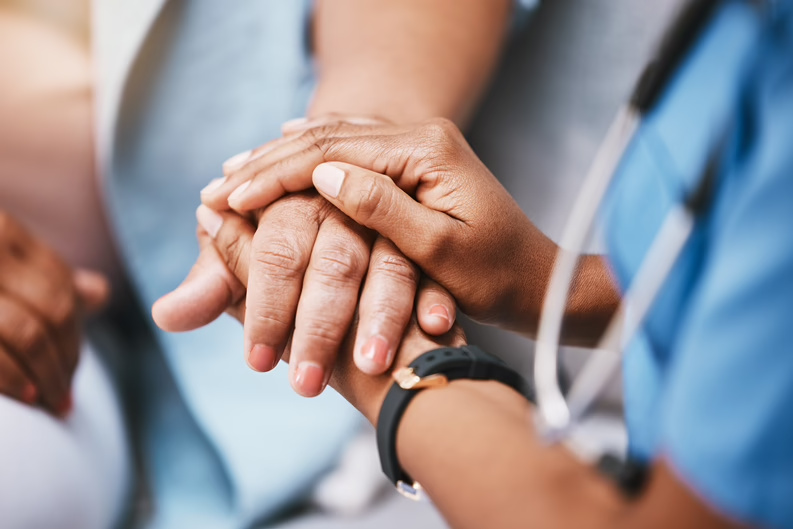
What I needed, more than almost anything, was to feel safe. To be reminded of that often, not once. Talk to me, not about me. Presume I can hear you. I am a person, not just a body in a bed. And touch me. Hold my hand. The comfort that brought me, in the middle of all that fear and pain, was beyond words.
The Lived Experience Panel highlighted that the acceptability of treatment decisions can be highly dependent on how decisions are made and communicated. Patients and families are relying heavily on those caring for them, often without fully understanding what is happening. In this context, communication is not just about information-sharing, it is crucial to creating trust and safety.
Acknowledging the significant time pressures and highly complex scenarios involved in the care of someone who is critically ill, another key insight of the Lived Experience Panel was that proactively finding opportunities for two-way communication is a simple and meaningful strategy. Panel member, Aisha, describes her experience in PICU with her then 6 year old:
While in the PICU, being included in ward rounds was important. Hearing the team’s discussions, understanding the reasons behind changing/ withholding treatments, and having our perspectives considered made us feel like partners in our daughter’s care. We valued clinicians who clearly explained the benefits and risks of different treatment options and shared what they believed was the best course of action.
Hearing stories of individuals and their loved ones navigating respiratory illness in critical care has provided the guideline development group with a rich understanding of the needs and values of the people the guidelines are designed to ultimately benefit. We are very grateful to everyone who shared their story, their insights and their wisdom with the team.
Kerri and Aisha’s stories and more of the Lived Experience Panel’s key insights can be found in the introductory section of the guidelines.
View the Australian guideline: Drug treatments for people with influenza who are critically ill.